


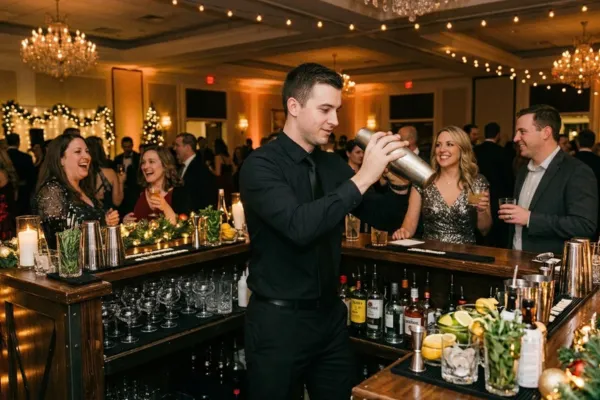
What Makes a Great Holiday Party Bartender
Holiday season is almost here. In 2026 it runs from Thanksgiving weekend through New Year's Eve, with the busiest stretch packed into six nights: the Thursdays and Fridays from December 3 to December 18. Hanukkah begins at sundown on December 4 and runs through two of those weekends. Christmas falls on a Friday, so most company parties wrap up by the 18th.
That is a lot of celebrating in a short window, and at nearly every one of those events, the bar is the busiest station in the room. It is where guests gather first, where lines form, and where most of the night's small problems start.
A great bartender makes all of that invisible. Here is what separates a great one from someone who can simply pour a drink.
They Are Fast Without Looking Rushed
The first thirty minutes of a holiday party are the hardest for the bar. Everyone arrives at once, and everyone wants a drink.
Great bartenders win that half hour before it starts. The bar is set, garnishes are cut, ice is full and backups are within reach. The signature cocktail is batched so it pours in seconds. They serve two or three guests at a time, make eye contact with the people waiting, and keep the line moving without making anyone feel hurried.
Pro Tip: Don't let the first thirty minutes land on one bar. A passed welcome drink at the door, or a second bar at the far end of the room, spreads the arrival rush before a line ever forms.
They Pour Consistently
Every drink should taste the same at 9 p.m. as it did at 6. Consistent, measured pours keep the night even, keep the bar bill predictable and keep a pleasant party from turning into a long one. A heavy hand is not generosity. It is a problem that shows up two hours later.
They Read the Room
Great bartenders notice who is moving fast. At a holiday party, that is often the first hour, when guests arrive straight from work without dinner and head to an open bar. They slow the pace without comment, offer water, and point guests toward the food.
When someone has had enough, the cut-off is quiet. A great bartender offers a zero-proof drink or a glass of water, keeps the tone friendly, and brings in the event lead or the host contact if needed. No scene, and often the guest barely notices.
Pro Tip: Time the first passed appetizers to go out the moment the bar opens, not twenty minutes later. Food in the first hour does more to keep the night even than anything the bar can do.
They Check ID Without Making It Awkward
Company parties include interns and new hires. Family celebrations include teenagers and college students home for break. Great bartenders check ID whenever there is any doubt, and do it so smoothly that no one feels singled out.
It matters more than people think. Under New York law, a host is not liable for serving free alcohol to adults, but can be liable for providing alcohol to anyone under 21, even if the guest did not seem intoxicated. The ID check protects the host.
Pro Tip: If the guest list includes interns or family members under 21, tell the bar ahead of time. Some hosts hand out wristbands at check-in, so bartenders never have to ask the same guest twice.
They Have the Training, and Know It Is the Starting Point
In New York, the foundation is ATAP, the Alcohol Training Awareness Program. It is the state-certified course in responsible service, covering how to check ID, recognize intoxication, understand standard drink sizes and refuse service. The State Liquor Authority recommends it for everyone who serves alcohol, and proof of training can reduce the penalty if a licensed venue is charged with a violation.
The course teaches what to watch for. Knowing when to act, at a crowded bar with a line three deep, comes from experience. Great bartenders have both.
They Are Hosts, Not Just Pourers
Guests remember the bartender. The great ones greet people, know the menu, recommend the signature cocktail, and make the zero-proof option sound just as appealing. They remember what someone ordered the first time. For a company party, that warmth is part of how the evening feels.
Pro Tip: Give the bartenders a one-line brief before doors open: whose party it is, what is being celebrated, and who the key hosts are. Guests notice when the bar knows whose night it is.
They Work as Part of a Team
A great bartender is in touch with the rest of the room: the lead on the floor, the servers passing drinks, the barback keeping the ice and glassware coming. They flag a supply running low before it runs out, and they tell the lead when a guest needs attention.
They Close the Bar Well
The last hour matters as much as the first. Great bartenders know when the bar closes, and they wind it down gracefully: last call on time, then coffee, water and a zero-proof option so the night ends softly rather than at the bar. Last call lands best when the host or the DJ announces it, as part of the evening rather than the bar shutting someone out.
Three Questions to Ask When You Book Bartenders
Are they ATAP trained?
Is there a lead or captain on the floor to back the bartender up if a guest needs to be cut off?
Will they plan the last hour with you, including when last call happens and what replaces the bar?
Ask us all three. We'll show you how we'd run the bar, then shape the plan around you and your client, so you can focus on the rest of the event.
FS Event Staffing provides professional bartenders and mixologists for holiday parties, galas and corporate events throughout the New York metro area. Planning a holiday event? Get in touch to reserve your team early.
