


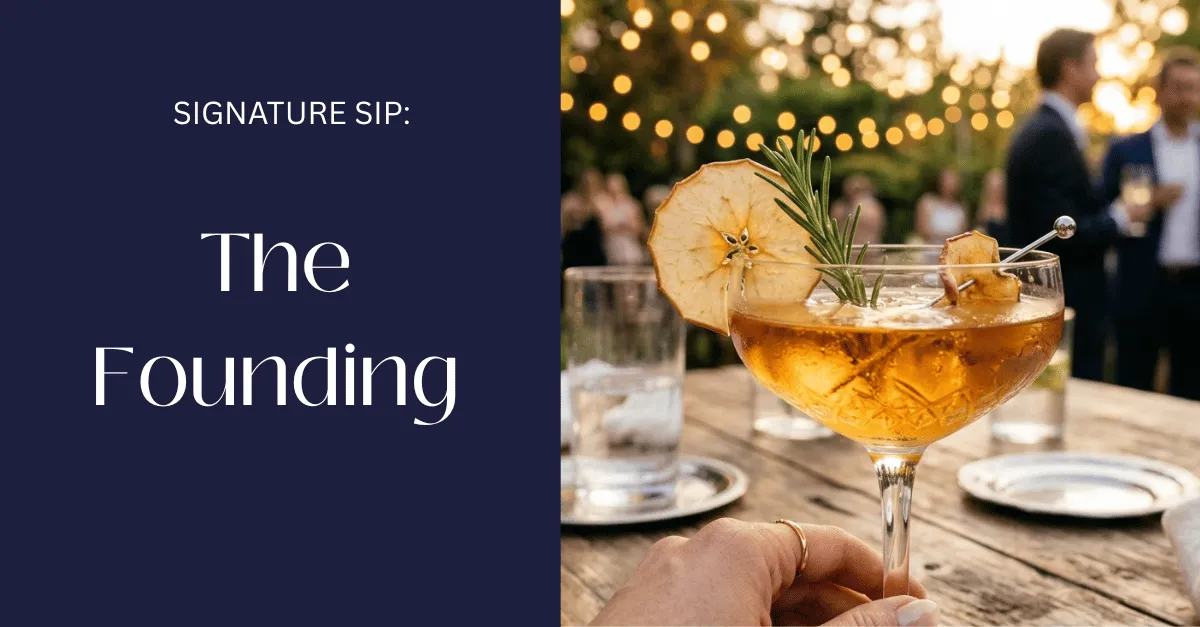
Signature Sip: The Founding — A Toast in Applejack to America's Oldest Spirit
The Spirit Behind the Sip
This is Part 3 of our American Spirits Series: Celebrating 250 Years. We've been building toward this all month — start with The Liberty Colada (Part 1) and The Philadelphia (Part 2) if you're just joining us.
Long before bourbon became the great American whiskey, before rye filled the taverns of Philadelphia, there was applejack.
Apple brandy — known colloquially as applejack — is arguably the oldest distilled spirit in American history. The apple orchards of the Northeast colonies produced more fruit than could be eaten or pressed into cider, and early Americans, being nothing if not resourceful, distilled the surplus into something that would keep. By the 1600s, applejack was already a fixture of New England farm life. By the time of the Revolution, it was as American as the country itself.
George Washington was a devoted admirer. He served apple brandy at Mount Vernon, kept it in his cellars, and after leaving the presidency, operated a rye whiskey distillery — but the apple orchards at Mount Vernon produced cider and brandy throughout his life. The first American president and the oldest American spirit: it doesn't get more fitting than that.
The Founding is a celebration of that history — warm, complex, and deeply American. Apple brandy, maple syrup (another colonial original), a whisper of cinnamon, and fresh lemon. The kind of drink that feels like it has a story to tell.
The Founding
Glass: Coupe or Nick & Nora
Ingredients:
2 oz applejack or American apple brandy (Laird's is the classic American choice)
0.75 oz fresh lemon juice
0.5 oz pure maple syrup
1 dash cinnamon syrup (or a pinch of ground cinnamon shaken in)
1 dash Angostura bitters
Dried apple slice and fresh rosemary sprig for garnish
How to Build It
Combine all ingredients in a cocktail shaker with ice.
Shake well — this one benefits from a vigorous shake to integrate the maple syrup fully.
Double strain into a chilled coupe or Nick & Nora glass.
Garnish with a dried apple slice balanced on the rim and a small rosemary sprig.
Pro Tip: Maple syrup is thicker than simple syrup and needs a proper shake to incorporate. If you're batching this for an event, pre-combine the maple syrup with the lemon juice and let it sit for 30 minutes before adding the spirit — it blends far more smoothly. The result is a perfectly integrated cocktail every time.
Mocktail Version
Fresh-pressed apple juice or unfiltered apple cider makes a beautiful base here — it carries the same orchard warmth that applejack does, just without the proof. Add lemon juice, maple syrup, cinnamon, and bitters (or a non-alcoholic aromatic), shake well, and strain into a coupe. Top with a few drops of sparkling apple cider for a gentle effervescence. This is one of those mocktails that genuinely holds its own — rich, layered, and seasonally perfect.
Garnish Guide by Event Style
Intimate (under 30 guests): Dried apple slice and fresh rosemary — both can be prepped ahead. The rosemary adds an aromatic element guests will notice the moment the glass reaches them.
Mid-size events (30–75 guests): Pre-batch the full cocktail base and keep refrigerated. Shake to order in small batches of 4–6, double strain, and garnish. Dried apple slices can be prepared days in advance and kept in an airtight container.
Large events (75–150+ guests): Batch and pre-strain into a cambro. Serve directly into chilled coupes from a ladle or small pitcher. Garnish with a dried apple slice only — the rosemary becomes impractical at volume but the apple keeps the visual story intact.
The Founding is Part 3 of our American Spirits Series, celebrating 250 years of American drink culture through July. Next week we close the series with the spirit that became the definitive American drink — and a cocktail worthy of 250 years. Don't miss Part 4.
Just joining us? Catch up with The Liberty Colada (Part 1) and The Philadelphia (Part 2) before next week.
Want a craft cocktail experience like this at your summer event? Our bartenders and mixologists bring this level of intention to every bar program they run.
