


Where the Celebration Begins: The Art of the Wedding Cocktail Hour
The Wedding Service Playbook — Part 2 of 4
The Wedding Service Playbook is a four-part series on the art of wedding service. This installment takes a deep dive into the cocktail hour — the opening act that sets the tone for the entire evening.
The cocktail hour is not a prelude. It is not the time guests spend waiting for dinner to start. It is the opening of the celebration — the first full breath of the event — and when it's done beautifully, it creates a warmth and energy that carries everyone through to the last toast.
Getting it right requires three things working in harmony: exceptional food, exceptional drinks, and the service team that delivers both with grace. Every detail — from the first tray that leaves the kitchen to the last used glass collected before guests enter the dining room — contributes to an experience that feels effortless precisely because it has been so carefully considered.
The Bar Sets the First Tone
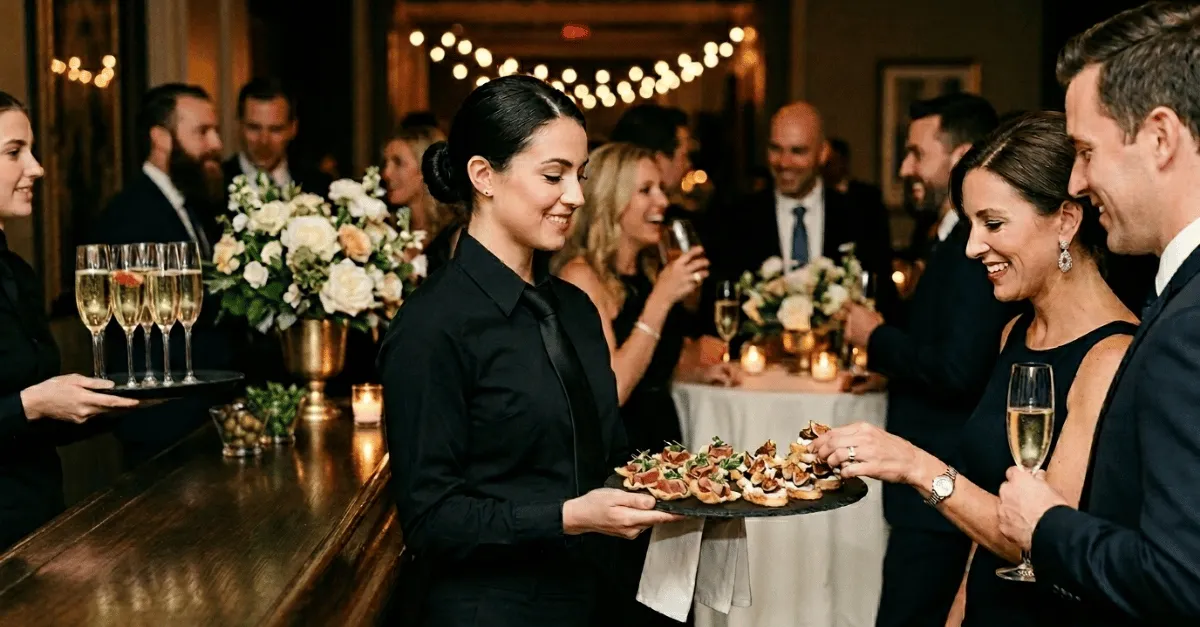
From the moment guests arrive, servers should be moving through the room with passed trays of wine or the signature cocktail — so that every guest is welcomed with something in hand before they've even reached the bar. No guest should have to look for a drink in the first moments of the cocktail hour. That first glass, offered gracefully and immediately, is the moment the celebration declares its intentions.
The bartender is at the center of this moment. The first five to ten minutes generate a surge that, if the bar isn't ready for it, creates a line that immediately undercuts the elegance of everything else. A skilled wedding bartender anticipates that surge — setup complete, signature cocktails prepped, team in position before the first guest walks in.
Pro Tip #1: Pre-batch wherever possible. The base of a signature cocktail combined in advance means the bartender is finishing and pouring, not building from scratch per glass. It protects both quality and speed when both matter most.
Food Is the Heart of the Hour
Presentation matters as much as taste. Trays should be thoughtfully arranged — not overfilled, not sparse, but composed. Passed items should be bite-sized, beautiful, and easy to eat in a single gesture.
Pro Tip #2: Brief passing staff on the menu story, not just the dish names. A server who can say "that's a seared tuna with yuzu aioli — one of the chef's favorites this evening" creates a moment of genuine hospitality. Five minutes in the pre-event briefing changes the entire guest experience.
Cold First, Then Warm — and Always Fresh
Cold hors d'oeuvres go out first, as soon as guests begin to arrive. Hot hors d'oeuvres follow once the room has filled — a full room means enough guests to consume warm items while they're still at their best. Send them out too early and they'll cool before they're eaten.
The captain — or kitchen captain on larger weddings — monitors the room as it fills and communicates directly with the kitchen so hot items are released at exactly the right moment.
Stream Staff as the Room Fills
Staff and trays should flow into the room proportionally as guests arrive. Early arrivals are welcomed with passed wine and the first cold items. As the room fills, the pace and volume of service builds naturally with it.
Pro Tip #3: Designate one staff member as the cocktail hour floater — no fixed station, one job: read the room and fill gaps. This person signals the bar when a second rush is building, guides passing staff toward underserved areas, and ensures trays are replenished before guests notice they're running low.
Elegance Means Clean as Much as Beautiful
A beautifully set cocktail hour loses its elegance quickly if used glasses, small plates, and napkins are allowed to accumulate. Maintaining the environment is as important as serving within it — staff should be actively collecting used glassware and plates as they circulate, continuously, not as an afterthought.
Pro Tip #4: As guests move toward the dining room, assign staff specifically to collecting used glasses before they reach the tables. A beautifully set dining room deserves to stay that way.
The Transition Is the Final Act
The cocktail hour ends not when the clock runs out, but when the last guest is seated and the room has been handed off cleanly to dinner service. Staff guide guests warmly toward the dining area, used glasses are collected, and the cocktail space begins its quiet reset in parallel.
The celebration doesn't pause for any of this to happen. It simply continues — seamlessly, beautifully — because the team was prepared for this moment before the first guest ever arrived.
This is Part 2 of The Wedding Service Playbook. Read Part 1: What Flawless Wedding Service Actually Looks Like.
FS Event Staffing provides experienced bartenders, passing staff, and wedding service teams across New York City, New Jersey, and Connecticut. If you're planning a wedding and want a team that treats the cocktail hour as the opening of something truly special, we'd love to talk.
